By Dr. Jonathan Lavian, MDSkin Cancer & Spots
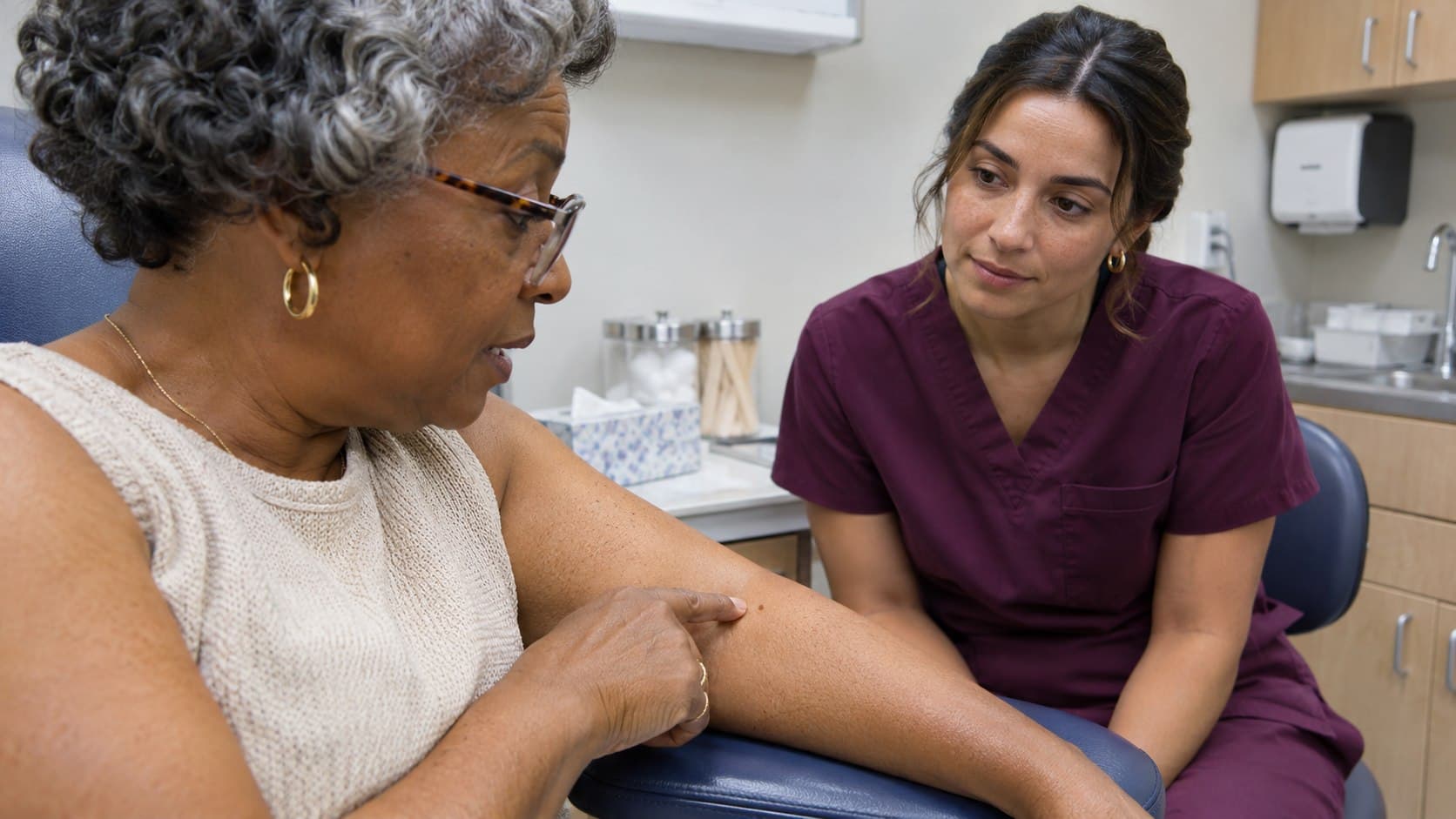
Found a new bump, spot or growth on your skin and wondering what it is? Most spots are harmless, but some are worth having checked. Here's a guide to the most common growths dermatologists see every day, plus the warning signs that mean it's time to make an appointment.
This guide is for general education only. It can't replace an exam, so if you're unsure about a spot, have a dermatologist take a look.
Seborrheic keratoses
These are some of the most common growths in adults over 40. They look waxy, scaly and slightly raised, almost as if they've been "stuck on" the skin, and range in color from tan to brown to black. They are harmless, but they can be removed if they become irritated or bother you cosmetically.
Cherry angiomas
These are small, bright red bumps made of tiny blood vessels. They often appear on the torso and become more common with age. They are harmless and can be removed for cosmetic reasons.
Skin tags
Skin tags are small, soft, flesh-colored growths that hang from the skin, often on the neck, underarms, eyelids or groin. They are harmless, but can be easily removed if they catch on clothing or jewelry.
Sun spots (solar lentigines)
Also called age spots or liver spots, these are flat, tan to brown spots on sun-exposed areas like the face, hands and shoulders. They are caused by years of sun exposure. They are harmless, but they are a sign of sun damage, so they're a good reminder to wear sunscreen.
Dermatofibromas
These are firm, small bumps, often on the legs, that may be pink, tan or brown. A telltale sign is that they dimple inward when you pinch them. They are harmless and sometimes appear after a minor injury such as a bug bite.
Moles
Most moles are harmless. But because melanoma, the most serious type of skin cancer, can start in or look like a mole, it's important to keep an eye on them.
Actinic keratoses
These are rough, scaly, sandpaper-like patches on sun-exposed skin, such as the face, scalp, ears and backs of the hands. They are precancerous, meaning they can turn into skin cancer over time, so they should be treated by a dermatologist.
When should you worry about a spot?
Use the ABCDEs of melanoma to check your moles and spots:
- A — Asymmetry: one half doesn't match the other.
- B — Border: the edges are irregular, ragged or blurred.
- C — Color: several colors or uneven shading.
- D — Diameter: larger than about 6 millimeters (the size of a pencil eraser), though melanomas can be smaller.
- E — Evolving: any change in size, shape, color or height.
Also watch for the "ugly duckling" sign: a spot that looks different from all your other moles.
Make an appointment if you notice:
- A new or changing spot
- A sore that doesn't heal within a few weeks
- A spot that bleeds, itches or hurts
- A shiny, pearly or pink bump, which can be a sign of basal cell carcinoma
The bottom line
Most skin growths are harmless, but the only way to know for sure is to have them checked. Regular skin checks help catch skin cancer early, when it's most treatable. This is especially important if you have a lot of moles, a history of sunburns, or a family history of skin cancer.
Have a spot you're wondering about? Schedule a skin check with us at dodermatology.com.
This article is for general education and isn't a substitute for an exam or personal medical advice.